San Demetrio Corone
The small Calabrian hill town that gave the Arbëresh their school and, through it, a recoverable written language.
- Entry
- H.3
- Where
- Crati valley, Calabria
- Period
- Settled fifteenth century
- Section
- Arbëresh
01The college on the hill
San Demetrio Corone sits in the Sila foothills of Cosenza province, roughly forty kilometres east of the provincial capital. The town is one of the older Arbëresh settlements in Calabria, founded by Albanian refugees in the decades following the Ottoman consolidation of the Balkans in the late fifteenth century. Like its neighbours it kept the Byzantine rite and, through the liturgy, the Albanian tongue — but it is distinguished from most of the other villages by a single institution: the Collegio Italo-Albanese di Sant'Adriano.
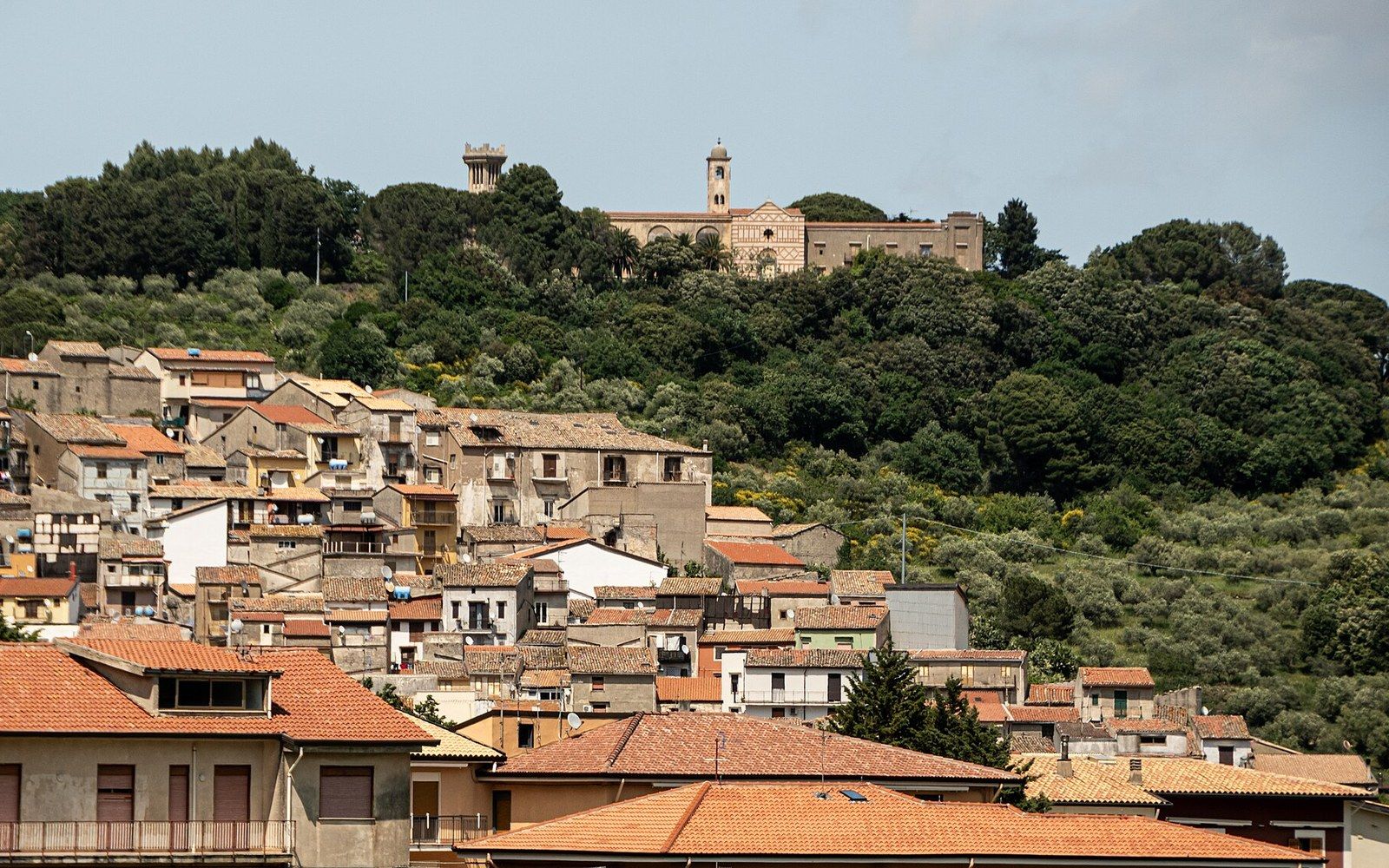
The college occupies a former Basilian monastery, Sant'Adriano, whose origins reach into the early medieval period; the Basilian monks — followers of the eastern rule of Saint Basil — had been in Calabria long before the Albanian settlers arrived, and the convergence of eastern Christianity and Albanian identity made the site a natural anchor. From the mid-eighteenth century onward, and more formally after reorganisation in the nineteenth, Sant'Adriano functioned as the principal school for Arbëresh clergy and, beyond that, for Arbëresh intellectual life as a whole.
Its importance is hard to overstate. The language spoken in communities scattered across Calabria, Basilicata, Sicily and Apulia had no common written standard, no press, and no school teaching it systematically. Sant'Adriano supplied all three at different moments. Scholars working within or adjacent to the college collected oral poetry and folklore, codified vocabulary, and — critically — argued in print that the spoken form preserved archaic features of Albanian that the mainland standard had since lost. The most cited figure in this story is Girolamo De Rada, born in San Demetrio Corone in 1814, who spent much of his life editing the college's journal and assembling the Arbëresh poetic tradition into published form.
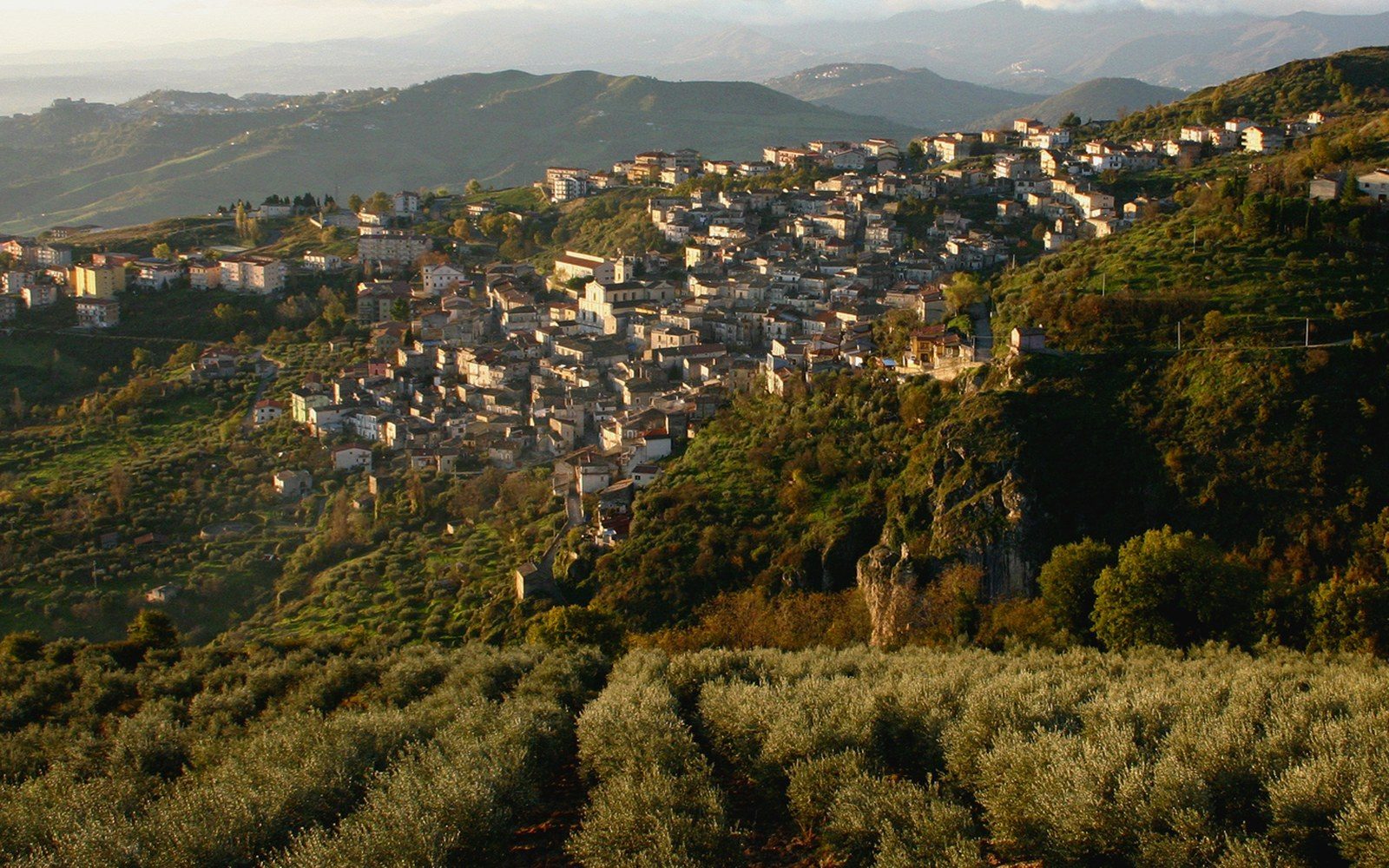
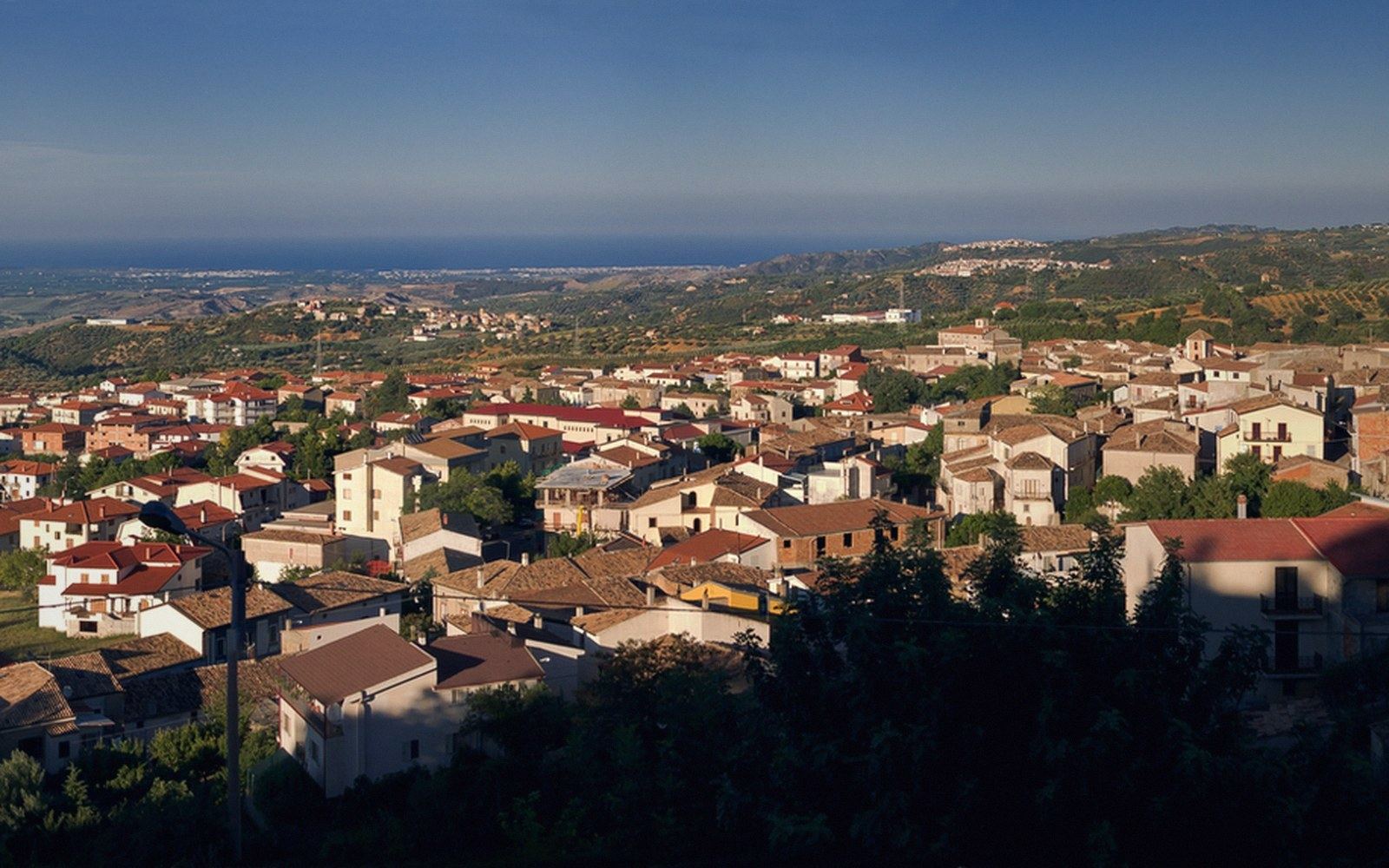
The town itself follows the pattern common to Arbëresh settlements in Calabria: a tight cluster on rising ground, the church prominent, the surrounding land agricultural. The Church of Sant'Adriano, attached to the college, contains Byzantine-inflected frescoes — the eastern inheritance visible in the rendering of faces and the arrangement of registers — that repay close attention. The college building proper is large relative to the town, a reminder that it drew students from the entire Arbëresh diaspora, not only from San Demetrio Corone itself.
The college continues to function as a secondary school. The fabric of the monastery survives substantially intact, and the archive it holds — manuscripts, periodicals, correspondence — remains the documentary core of Arbëresh cultural history on Italian soil.
- Collegio Italo-Albanese di Sant'Adriano
- the school and former monastery that served as the intellectual centre of the Calabrian Arbëresh community
- Basilian monks
- monks following the eastern rule of Saint Basil, present in Calabria before the Albanian settlers arrived
- Byzantine rite
- the eastern Christian liturgy maintained by Arbëresh communities across southern Italy
- Late 15th centuryAlbanian refugees settle San Demetrio Corone following Ottoman consolidation of the Balkans
- Mid-18th century onwardSant'Adriano reorganised as a college for Arbëresh clergy and scholars
- 1814Girolamo De Rada born in San Demetrio Corone; later the college's most prominent associated intellectual